

Explore SetPoint Therapy







Speak with a Patient Activator
Patient Voices
Hear directly from people living with SetPoint Therapy — in their own words.
LYNN GOT HER LIFE BACK WITH SETPOINT THERAPY
Actual patient stories shared with their permission. Individual outcomes vary.

PATTY’S JOURNEY WITH SETPOINT THERAPY

BRIDGETTE’S ROAD BACK TO INDEPENDENCE

KEN’S NEXT CHAPTER WITH SETPOINT THERAPY

Tools for your journey
HOW IT WORKS



Featured stories





Follow SetPoint Medical for updates
Frequently asked questions about the SetPoint System
How does the SetPoint System work?
The SetPoint System is a neuroimmune modulatory device that treats RA and is designed to restore immunologic homeostasis. 3,4,8 The SetPoint System consists of an integrated neurostimulator intended to activate innate anti-inflammatory processes to modulate multiple intracellular pathways,3,4,5 thereby reducing production of an array of proinflammatory cytokines6,7—providing a novel treatment option indicated for your biologic-experienced RA patients. The stimulation parameters of the SetPoint System are based on extensive preclinical biomarker analysis that indicated that a single 60-second daily stimulation reduces multiple cytokines, including TNF-α, IL-β, and IL-6, by 30-70%, providing symptom reduction without immunosuppressive risks.4,5,6,7
Is the SetPoint System safe and effective for treatment of RA?
The SetPoint System’s unique mechanism of action builds on over two decades of research and engineering, including the clinical experience from other devices that stimulate the vagus nerve, to provide you and your patients with the first neuroimmune modulation therapy for treatment of RA.
The SetPoint System’s safety and effectiveness were studied in the RESET-RA clinical study that enrolled 242 patients who were inadequate responders or intolerant to one or more biologics and/or JAK inhibitors. The study successfully met its primary endpoint of ACR20 at 3 months, with sustained improvements observed through 12 months of follow-up compared to baseline. With 12 months of therapy, nearly half of the patients were in DAS28-CRP low disease activity or remission.*
The SetPoint System, as well as the implant procedure, is considered safe.10 There was a low risk (1.7% n = 4) of related serious adverse event rate in the peri-operative 3 months, with no (0%) related serious events occurring through 12 months. Additionally, through 12 months, there were no malignancies, major cardiac events, or serious infections associated with the SetPoint System, highlighting the safety of this novel therapeutic option.
To see detailed data, visit the Clinical Evidence page.
*Analysis based on patients who were treated with SetPoint Therapy for 12 months without the addition of biologic, JAK inhibitors or high-dose steroids, or change in csDMARDs.
Who is the ideal patient candidate for SetPoint Therapy?
The SetPoint System is indicated for adults with moderately to severely active RA who have had an inadequate response, loss of response, or intolerance to one or more biological or targeted synthetic DMARDs.
Hence, the SetPoint Therapy could be considered for adult RA patients who have failed at least one biologic or JAK inhibitor and are seeking an alternative therapy; those who cannot tolerate these medications; those who are at high safety risks for JAK inhibition due to comorbid conditions; and those who had failed to get adequate disease control on biologics or JAK inhibitors.
In the RESET-RA study, improvement in the number of tender and swollen joints as well as disease activity was seen by 3 months after starting stimulation. This response rate was higher in patients who had exposure to just one prior biologic.
Based on its mechanism of action that manages the inflammatory process without immune suppression, SetPoint Therapy can be combined with biologics or JAK inhibitors if desired, preserving treatment options in the future.3,4,5,8
Do patients feel the implant or stimulation?
SetPoint Therapy is programmed to ensure comfort for the patients. Activation of the device includes a gradual increase of the stimulation level to ensure the therapy is not uncomfortable. Sensation of stimulation varies, but patients may feel a light tickling sensation, cough, or changes in voice during stimulation. The stimulation is delivered automatically for 60 seconds each day, and the rheumatologists can personalize the time of stimulation.
The SetPoint Implant typically cannot be felt or palpated externally.
What infrastructure does my clinic need to offer SetPoint Therapy to my RA patients?
We are committed to making it easy for you to offer SetPoint Therapy to your RA patients. Our Territory Manager will support your clinic’s onboarding process and can connect you with SetPoint-trained surgeons in your area.
Upon your clinic’s activation, SetPoint Medical will provide you and your team with the training and materials you’ll need to educate your RA patients on this therapy. SetPoint Medical will work directly with the surgical facility to help seek prior authorization for the procedure on your patient’s behalf. SetPoint Activators are available to help your patients navigate through the referral, prior authorization, and implant placement processes.
A couple of weeks after the implant procedure, the patient will return to your office to have therapy activated using an iPad-based app, which SetPoint Medical will provide. After activation, the therapy is delivered automatically for 60 seconds each day.
If you have additional questions, please contact your SetPoint Territory Manager.
What is the implant procedure like?
The SetPoint System is typically placed during a 60-to-90 minute outpatient surgical procedure under general anesthesia.9 Patients typically go home the same day as the procedure and resume activities of daily living the following day.
The SetPoint Implant is placed by a surgeon who is experienced with procedures involving the vagus nerve, typically a functional neurosurgeon or an ENT surgeon. Your Territory Manager can help to identify trained surgeons near you. Additionally, SetPoint Medical will assist with the prior authorization process for the SetPoint procedure and will keep you and your patients informed to ensure a best-in-class experience for your patients and your staff.
If you have additional questions, please contact your Territory Manager.
How does the SetPoint System work?
The SetPoint System is a neuroimmune modulatory device that treats RA and is designed to restore immunologic homeostasis. 2,3,7 The SetPoint System consists of an integrated neurostimulator intended to activate innate anti-inflammatory pathways to modulate multiple intracellular pathways,2,3,4 thereby reducing production of an array of proinflammatory cytokines5,6—providing a novel treatment option indicated for your biologic-experienced RA patients. The stimulation parameters of the SetPoint System are based on extensive preclinical biomarker analysis that indicated that a single 60-second daily stimulation reduces multiple cytokines, including TNF-, IL-1, and IL-6, by 30-70%, providing symptom reduction without immunosuppressive risks.3,5,6
Who is the ideal patient candidate for SetPoint Therapy?
The SetPoint System is indicated for adults with active, moderate-to-severe RA who have had an inadequate response, loss of response, or intolerance to one or more biological or targeted synthetic DMARD.
Hence, SetPoint Therapy is ideally suited for RA patients who do not want to continue or cannot tolerate biologics and/or JAK inhibitors, those who are at high safety risks for JAKs due to comorbid conditions, and those who had failed to get adequate disease control on biologics and JAKs.
Pre-specified analysis of the safety and efficacy data from the RESET-RA study in biologic-experienced RA patients indicated that therapy response rates are faster and higher among patients with fewer prior biologic exposure, with those with just one prior biologic exposure having most robust responses.
Uniquely, due to its mechanism and safety profile, SetPoint Therapy can be combined with biologics or JAK inhibitors, if desired, preserving all of your treatment options in the future.
Do patients feel the implant or stimulation?
The SetPoint Therapy is programmed to ensure comfort for the patients. Activation of the device includes gradual increase of the stimulation current to ensure that the therapy is never uncomfortable. Sensation of stimulation varies, but patients may feel a light tickling sensation, cough, or changes in voice during stimulation – that is delivered automatically for just 60 seconds each day.
The SetPoint Implant cannot be felt or palpated externally.
What is the implant procedure like?
The SetPoint System is typically placed during a 60-90 minute outpatient procedure under general anesthesia. Patients typically go home the same day as the procedure and resume activities of daily living the following day.
The Setpoint Implant is placed by a surgeon who is experienced with procedures involving the vagus nerve, typically a functional neurosurgeon. Your SetPoint Territory Manager will identify and train a neurosurgeon near you to ensure a seamless referral experience for you and your patient. Additionally, SetPoint will obtain prior authorization for the SetPoint procedure and will keep you and your patients informed to ensure a best-in-class experience for your patients and your staff.
If you have additional questions, please contact your SetPoint Territory Manager.
How do you place the SetPoint Implant?
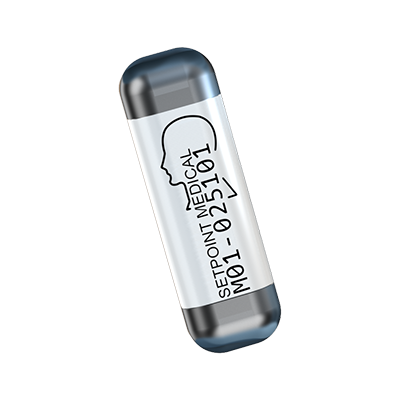
The SetPoint System includes a small, leadless, integrated neurostimulator that is placed directly on the left vagus nerve through a single incision during an outpatient procedure. The leadless implant is placed on the nerve within a flexible silicon Pod.
Once the vagus nerve is accessed, the Pod is first placed under the nerve. The Implant is then placed in the Pod, which is then sutured closed. An integrated, leadless implant with rechargeable battery means there is no need to coil electrodes around the nerve, to tunnel the lead or create a chest pocket for a separate battery or generator.
Please see complete placement instructions in the Surgical Manual
Frequently asked questions about the SetPoint Therapy
Who is eligible for SetPoint Therapy for rheumatoid arthritis (RA)?
Adults with moderately to severely active rheumatoid arthritis (RA) who did not respond well, lost response, or could not tolerate advanced RA drugs like biologics (e.g. Humira, Enbrel, Cimzia, Remicade, Rituxan, Actemra or Orencia) or JAK inhibitors (e.g. Xeljanz, Rinvoq or Olumiant) may be eligible for SetPoint Therapy. SetPoint Therapy, developed by SetPoint Medical, is prescribed by a rheumatologist, who, in partnership with the implanting surgeon, determines eligibility. Those who have had a vagotomy or splenectomy, or whose healthcare provider determines that it is not safe to use the SetPoint System, are not eligible for SetPoint Therapy.
Do I need to try every rheumatoid arthritis (RA) medication before considering SetPoint Therapy?
No, you do not need to try every rheumatoid arthritis (RA) medication before being considered for SetPoint Therapy. SetPoint Therapy was developed for adults who continue to struggle with moderately to severely active RA despite trying at least one antirheumatic drug (b/tsDMARDs). These could include biologics (e.g. Humira, Enbrel, Cimzia, Remicade, Rituxan, Actemra or Orencia) or JAK inhibitors (e.g. Xeljanz, Rinvoq or Olumiant). SetPoint Therapy may be an option for you if you had a poor response, lost response or were not able to tolerate the side effects of at least one of the above types of medications. Your rheumatologist determines whether SetPoint Therapy is appropriate for you based on medical history and symptoms.
Do I need to stop taking my rheumatoid arthritis (RA) medications before starting SetPoint Therapy?
No, you are not required to stop your rheumatoid arthritis (RA) medications to get SetPoint Therapy. SetPoint Therapy is a completely new treatment approach that activates your body’s own immune-balancing pathways, and can be used alongside existing treatments, such as DMARDs (e.g. methotrexate, hydroxychloroquine, sulfasalazine), biologics (e.g. Humira, Enbrel, Cimzia, Remicade, Rituxan, Actemra or Orencia) or JAK inhibitors (e.g. Xeljanz, Rinvoq or Olumiant). Together with your doctor, you can decide what’s right for you.
What does stimulation from SetPoint Therapy feel like?
The feeling of stimulation varies from person-to-person. Patients who have received SetPoint Therapy describe stimulation as a mild tickling sensation, cough, or temporary change in voice during the one minute when the stimulation is delivered. Your rheumatologist programs the strength of SetPoint Therapy gradually over 2-3 weekly visits so it is comfortable for you.
When does the SetPoint System stimulation occur during the day?
The time of stimulation is set by your rheumatologist based on your preference. In the RESET-RA study, most patients received stimulation in the early hours of the morning, while they were typically asleep. The stimulation will occur automatically, and you do not need to do anything to turn it on each day. You will just need to charge the SetPoint System for a few minutes each week. This “set and forget” approach means you have more freedom to enjoy life on your terms.
How often does the SetPoint System stimulate the vagus nerve?
The SetPoint System delivers stimulation once a day for one minute, and is delivered automatically.
2. Kelly MJ, et al. Manipulation of the inflammatory reflex as a therapeutic strategy. Cell Rep Med. 2022;3(7):100696.
3. Koopman FA, et al. Autonomic Dysfunction Precedes Development of Rheumatoid Arthritis: A Prospective Cohort Study. EBioMedicine. 2016;6:231-237.
4. van Maanen MA, et al. The cholinergic anti-inflammatory pathway: towards innovative treatment of rheumatoid arthritis. Nat Rev Rheumatol. 2009 Apr;5(4):229-32.
5. Chavan SS, et al. Mechanisms and Therapeutic Relevance of Neuro-immune Communication. Immunity. 2017;46(6):927-942.
6. Koopman FA, et al. Vagus nerve stimulation inhibits cytokine production and attenuates disease severity in rheumatoid arthritis.
7. Peterson D, et al. Clinical safety and feasibility of a novel implantable neuroimmune modulation device for the treatment of rheumatoid arthritis: initial results from the randomized, double-blind, sham-controlled RESET-RA study. Bioelectronic medicine. 2024;Mar 13;10:8. Proc Natl Acad Sci USA. 2016;Jul 19;113(29):8284-9.
8. Data on file at SetPoint Medical.
