
The SetPoint Implant Procedure: What to Expect

If you’re considering SetPoint Therapy for rheumatoid arthritis (RA), the clinical data may have caught your attention. But the question that tends to come next is more personal: what is the procedure actually like?
For people who have spent years managing RA with traditional treatments, a therapy that works through your body’s neural network can open up a whole new set of possibilities. Here, patients who are using SetPoint Therapy share what the experience was like, from making the decision, to the day of the procedure, to what recovery looked like in the days and weeks that followed.
Making the Decision to Get the SetPoint Implant
Deciding to move forward with a therapy is a personal decision, and every patient comes to it differently.
Lynn, whose RA had progressed quickly despite multiple medications, described the moment she learned about SetPoint Therapy: “I was excited about it, and I felt like, okay, maybe I could get my life back for the first time in a long time. When all of the other medications failed, this felt like something that could work for me.”
Ken, came to his decision through research: “I did what I always do with any medical decision. I did research. I’ve got a doctorate. I know a lot about research methodology. Rheumatology is not my area, but I can tell you if a study was done right and what the study is actually saying. So I looked at that stuff, and I said, alright, it looks like a pretty minor procedure.”
When all of the other medications failed, this felt like something that could work for me.
- Lynn M., North Carolina
For most patients, the process starts with a conversation with their rheumatologist. If you and your doctor agree that SetPoint Therapy is a good option, they’ll refer you to a surgeon trained to place the device.
To understand the science behind how the therapy works, see Neuroimmune Modulation for Rheumatoid Arthritis: How It Works.

Speak with a Patient Activator
Meeting the Surgeon Before Your SetPoint Implant Procedure
Once a rheumatologist refers you for a surgical consultation, the next step is a pre-operative visit with the surgeon who will place the SetPoint Implant on the left vagus nerve. This appointment is an opportunity to ask questions, discuss the procedure, and make sure you feel comfortable moving forward.
Bridgette, who lives in Arizona, described her surgical consultation as reassuring: “I went and saw the surgeon. It was a very, very simple appointment. She made me feel at ease right away. She answered my questions. She answered my husband’s questions. She had a really good sense of humor. It was so nice, so easy. She was very professional. It was a very, very good experience.”

Lynn, from North Carolina, described a similar experience. Her surgical team walked through the procedure in advance so she felt comfortable with what she was about to do: “They went over everything in detail, where it would be on my neck, where the incision would be. The surgeon even said, ‘I’m gonna make the smallest incision. You won’t even realize it’s there after it heals.’ One hundred percent true, it’s hard to even find it.”

The surgical team will also review the risks associated with the procedure, including the risks of anesthesia. The most common side effects reported in clinical studies were related to the surgical placement and were generally mild to moderate. They included temporary hoarseness, pain or swelling at the incision site, and sore throat or cough. These effects typically resolve over time.
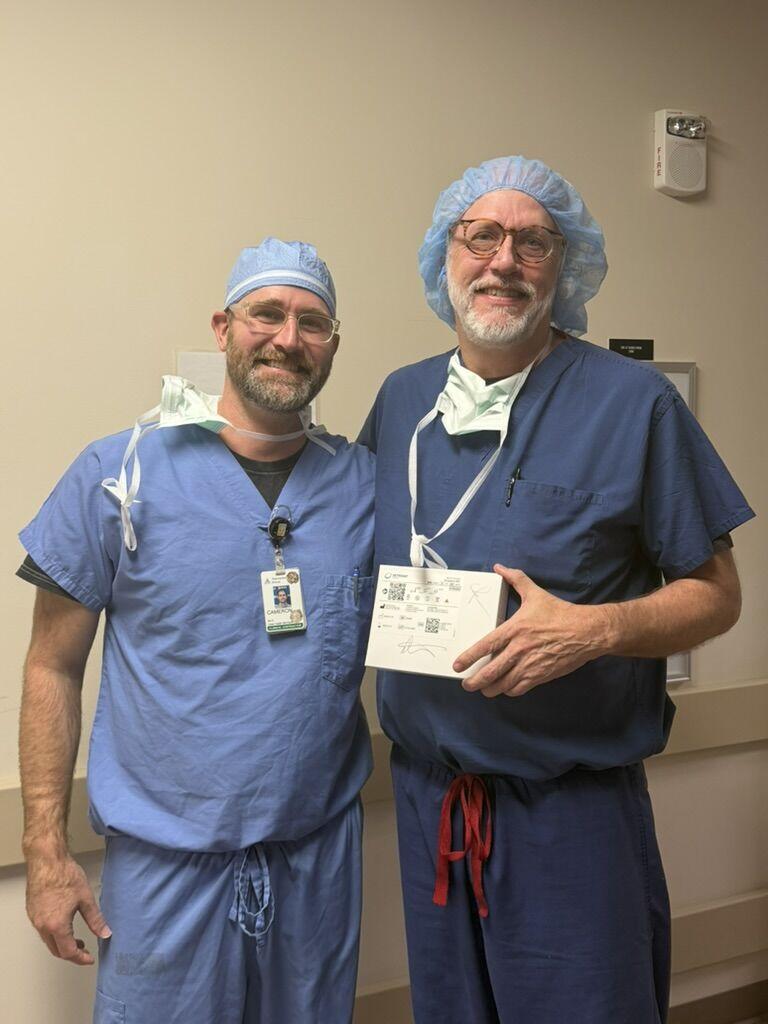
As with any procedure, these potential side effects from the procedure are important to discuss openly with your care team so you feel fully informed.
Insurance Approval and Scheduling for the SetPoint System
Before the procedure is scheduled, the SetPoint team will partner with your physicians and work with your insurance company to verify your benefits and seek prior authorization for SetPoint Therapy, if required. Your surgical facility will be able to provide you with an estimate of the anticipated out-of-pocket cost for your insurance plan at this time. This step can take some time, but you won’t need to navigate it alone — the SetPoint team is there to support you through the process.
The Day of the SetPoint Implant Procedure
During the outpatient surgery, which typically takes 60 to 90 minutes, the surgeon places the Implant on the vagus nerve on the left side of your neck. Most people return home the same day and can typically resume normal daily activities the following day.
Ken, who took part in the study that led to the SetPoint System’s FDA approval and who has had several other unrelated surgical procedures, put it in perspective: “We were in the car leaving when the doctor called to give my wife his update that the surgery was done and went well. It was that fast.”

Bridgette and her husband drove two hours to reach their surgical center and drove home the same day: “There really wasn’t anything to it. It was so easy. I’ve had hand surgery that was worse than getting the implant. It didn’t really hurt at all. I was able to move my neck. I was able to eat. I was able to drink. We drove home from Phoenix that day, on a very bumpy highway.”
After the SetPoint Implant Procedure: What to Expect in the First Days and Weeks
Because the SetPoint implant procedure is an outpatient surgery, most patients return home the same day and can typically resume normal daily activities the following day. Your surgeon will advise you on any specific precautions during the healing period, such as temporary limits on lifting or strenuous activity.
Bridgette described being back to her routine almost immediately: “After the surgery, the next day, I was able to really just start doing everything that I did the day before surgery. I was able to brush my teeth, brush my hair. I got dressed by myself. I helped my husband with breakfast that morning.”

Patty had a similar experience: “Those first two days, I did take a pain pill to help with some of the discomfort. After that, I’d get up, come down here and sit and read. I let the dog out. I’d make lunch. I was able to get my own coffee. I did everything I normally would do.”
Lynn noted that the recovery instructions were straightforward: “The first day, they obviously said, go home, rest. No exertion. I think I had a lifting limitation for like two weeks. I couldn’t pick anything up over two pounds, no overreaching, just to protect the stitching. But after that, I really don’t remember anything that would affect your normal daily life.”
Ken summed up his recovery experience succinctly: “This is probably one of the least invasive surgeries I’ve ever done.”
The Scar: What It Looks Like After Healing
It’s natural to wonder what a surgical scar on the neck will look like. The SetPoint System procedure typically involves a small surgical incision (about an inch) in the neck, typically placed within a natural crease in the skin. SetPoint Medical’s Implant is placed by a surgeon with experience and training with this type of device and they try to minimize visible scarring. Scar size and appearance will vary by individual. Some patients may have minimal to no visible scarring, while others may notice a small scar that typically fades over time as healing progresses.

Lynn said it was something she was apprehensive about beforehand, but her concern turned out to be unfounded: “The scar from the surgery, you can’t see it. The surgeon did a wonderful job. It’s hard for me to even find it, and I know exactly where it is.”
Bridgette spoke of a similar experience: “The surgeon put it in line with one of the skin wrinkles, so that you really can’t tell that it’s a scar. It just looks like a little bit more of a defined wrinkle… Nobody knows. Nobody cares. Nobody can see it.”
Ken noted “The scar for me, you can’t find it. It’s just not visible.”
The SetPoint System Activation: When Therapy Begins
A couple of weeks after the procedure, your surgeon will see you for a post-operative visit to check your incision. Once cleared, you return to your rheumatologist, who activates the device and gradually adjusts the stimulation level to make sure the therapy is comfortable for you. Once activated, the SetPoint System delivers therapy automatically, one minute per day, every day.

Bridgette described the activation process: “Having the SetPoint Implant turned on in the doctor’s office and turned up to see what level of strength is comfortable for you is very easy. There’s no pain at all. It’s just like a little tickle in the neck. They don’t try to push you to go to a higher level. If you’re scared, they can start out really, really, really low, and they’re there with you the whole time while they turn it up.”
Ken, who wasn’t sure what to expect, was pleasantly surprised: “I was apprehensive, because we are talking about electric shocks. You can hear them say, ‘It’s low voltage,’ but still. When they started it up, it felt like just a little kick, a little thump, and then kind of a vibration. It doesn’t feel like an electric shock. It feels more like vibration than anything else.”
There’s no pain at all. It’s just like a little tickle in the neck.
- Bridgette S., Arizona
The stimulation is often scheduled for the middle of the night, so most patients are asleep when it happens. If stimulation ever becomes uncomfortable, your rheumatologist can adjust the programming to match your comfort level.
Your only ongoing responsibility is charging the device for a few minutes once a week using a wireless charger. From there, your rheumatologist monitors your treatment and disease activity over time. For a closer look at the daily routine, see Living With the SetPoint System.
Understanding the Risks Involved With the SetPoint Implant Procedure
As with any procedure that involves surgery, there are risks, and it’s important to discuss them openly with your care team. Risks may include pain or infection after surgery, hoarseness, bruising, swelling, coughing, and throat irritation. The most commonly reported side effects in the clinical trial that led to the SetPoint System’s FDA approval were related to the surgical placement of the device. They were generally mild to moderate and typically resolved over time. The most common procedure-related side effect was hoarseness, occurring in about 5% of study participants.
Here is how Lynn, who experienced one of the more severe cases of hoarseness, described her experience with the side effect:
“It is normal to be hoarse right after surgery, but I couldn’t really speak. A whisper is all I could get out. So, I had to see a vocal cord specialist. I had an [in clinic] procedure done and the next day, I could talk like I had my voice back. Now, I can speak in a normal voice, and can be heard.
But, as I’ve told everyone, if I had lost my voice completely, I would still have the implant because not being able to talk is fine when all my pain was taken away. Knowing what I know now, and having the effects with the vocal cord, 100% would still do SetPoint. 100%.”

Treatment-related serious adverse events, such as what Lynn experienced, occurred in less than 2% of patients (4 of 242 participants) in the clinical trial, all during or shortly after the procedure, and all were managed and resolved. For a detailed look at safety and side effects, see Neuroimmune Modulation for RA: Safety, Side Effects, and What the Research Shows.
Is the SetPoint System Right for You?
The SetPoint System is designed for adults with moderately to severely active RA who have not responded well to one or more biologic or targeted synthetic DMARDs. If your current treatment isn’t giving you relief, or you haven’t been able to tolerate it, the SetPoint Implant procedure may be worth discussing with your rheumatologist.
If you’re living with RA and you haven’t responded well to other treatments, SetPoint Therapy may be worth exploring. You can complete a short form to find out if it might be a good fit for you. If you’re a potential candidate, you’ll be connected with a Patient Activator from our team who can help answer your questions and walk you through next steps.
You may also want to bring up SetPoint Therapy at your next visit directly with your rheumatologist. They can help you evaluate whether the SetPoint System might be appropriate based on your treatment history and current disease activity.