
Vagus Nerve Stimulation for RA: Safety, Side Effects, and What the Research Shows

Article content reviewed by experts at SetPoint Medical
If you’re living with rheumatoid arthritis (RA) that hasn’t responded well to medications, you’ve probably spent a lot of time researching what else is out there. Vagus nerve stimulation may have come up in that search, and it’s natural to have questions, especially about safety.
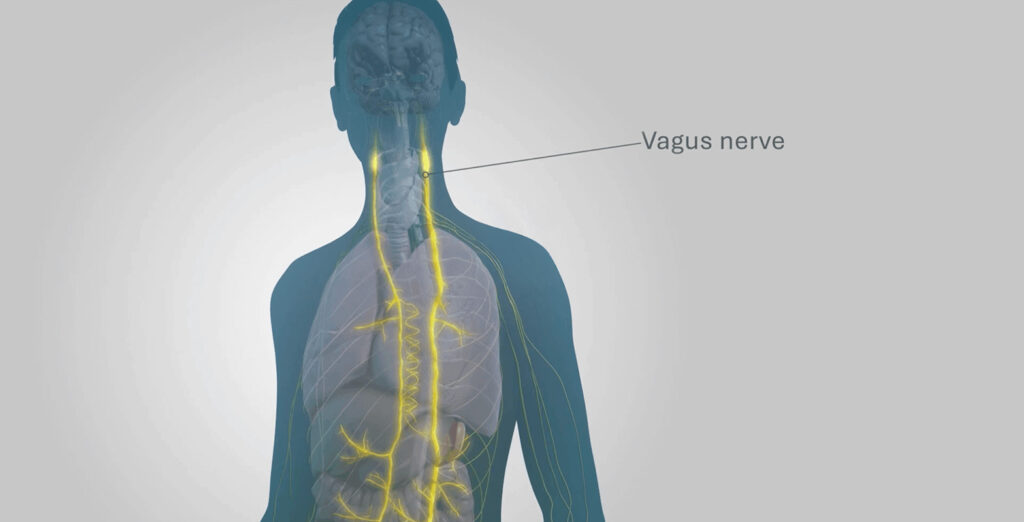
Vagus nerve stimulation works by sending mild electrical signals through the vagus nerve to help regulate the body’s inflammatory response. It’s a concept that’s been studied for years, and now it’s moved from research into clinical reality: the SetPoint System is the first and only FDA-approved device of its kind for the treatment of moderately to severely active RA.
The SetPoint System received FDA approval in July 2025, backed by a rigorous 262-patient clinical trial called RESET-RA, whose 12-month results were published in Nature Medicine in January 2026. The research showed meaningful improvements in RA symptoms alongside a favorable safety profile.
Let’s walk through what the study found, what the safety data looks like, and what side effects have been reported.
What Is the SetPoint System?
The SetPoint System is a small, wireless implantable device, about one inch long, that a surgeon places on the vagus nerve on the left side of your neck during an outpatient procedure. Once activated, it delivers one minute of mild electrical stimulation once a day, every day, for up to 10 years.
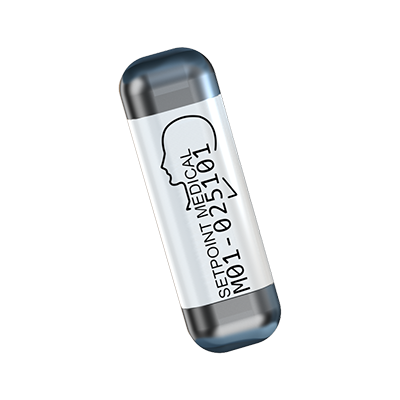
That stimulation activates your body’s own natural anti-inflammatory pathway, helping to restore balance to your immune system and reduce the inflammation that drives RA symptoms. Because therapy is delivered automatically, there’s nothing you need to do for your daily treatment. You simply charge the device for a few minutes each week using a wireless charger. There are no pills, no injections, and no infusions.
What Does the Research Show?
The FDA approval of the SetPoint System was based on the RESET-RA study, a 262-patient, randomized, double-blind, sham-controlled clinical trial conducted at medical centers across the United States. This is the gold standard of clinical research design, the same type of rigorous trial used to evaluate major pharmaceutical treatments. The study’s 12-month results were published in Nature Medicine, one of the world’s most respected medical journals.
Here are the key findings:
- The study met its primary effectiveness endpoint at three months, and results continued to improve over time. At the three-month mark, people receiving SetPoint Therapy showed statistically significant improvement in RA symptoms compared to the control group. And unlike many drug therapies, where the full benefit is typically seen by three months, the response to SetPoint Therapy continued to build, with more than half of all patients completing the study achieving meaningful improvement by 12 months.
- 75% were managing on SetPoint Therapy alone at 12 months, without needing to add a biologic or JAK inhibitor.
- Nearly half of those treated for 12 months achieved low disease activity or remission, the goal that many people with RA are working toward.
Beyond these results, nearly all study participants stayed on SetPoint Therapy through 12 months, and 94% said they would recommend SetPoint Therapy to friends or family.
Wondering if you might be a candidate? You can take a short eligibility survey to find out if the SetPoint System may be an option for you and whether it’s available in your area.
Is Vagus Nerve Stimulation for RA Safe?
Safety was a central part of the RESET-RA study, and the FDA reviewed the complete safety data as part of the approval process. The results were reassuring.
Only 1.65% of patients experienced a related serious adverse event, and these occurred primarily in the three-month period following surgery. All of these events were managed and resolved, and no new related serious adverse events occurred through the remaining 12 months of follow-up. Through that same period, zero malignancies, major cardiac events, or serious infections associated with SetPoint Therapy were observed.
While the SetPoint System is the first device proven safe for the treatment of RA, it builds on an established foundation: devices that stimulate the vagus nerve have been implanted in more than 100,000 patients for other neurological conditions over the past 20 years. The RESET-RA study confirmed that both the placement procedure and the ongoing daily stimulation were well-tolerated.
There are some situations where the SetPoint System should not be used. It is not appropriate for people who have had a vagotomy (removal of the vagus nerve) or a splenectomy (removal of the spleen), or for those whose healthcare provider determines the surgery would not be safe. Your doctor can help you determine whether vagus nerve stimulation is appropriate for your situation.
What Are the Side Effects?
The most commonly reported side effects in the RESET-RA study were related to the surgical placement of the device. They were generally mild to moderate and typically resolved over time.
The most common procedure-related side effect was hoarseness, caused by vocal cord complications from surgery near the vagus nerve, occurring in about 5% of study participants. Other non-serious effects included pain, redness, and swelling at the implantation site, as well as sore throat, cough, or tingling. These types of effects are consistent with what has been observed in more than 100,000 patients treated with other vagus nerve stimulation devices over the past 20 years.
As with any procedure that involves surgery, there are risks, and it’s important to discuss them openly with your surgical and rheumatology care team before making a decision. Individual results may vary.
How Vagus Nerve Stimulation for RA Differs from Other Treatments
If you’ve been treated with biologics or JAK inhibitors, you know these medications work by suppressing parts of your immune system.
That approach can be effective, but it can also come with side effects related to immune suppression, and many people find that their medications lose effectiveness over time or cause issues that make it hard to stay on treatment.
The SetPoint System takes a fundamentally different approach. Instead of suppressing the immune system, it modulates it, working with your body’s natural nerve-to-immune-system connection to help restore balance. This is why doctors call it “neuroimmune modulation.” Because the SetPoint System works with your immune system rather than suppressing it, it preserves your body’s ability to fight infections, a meaningful distinction for people who have cycled through multiple medications and experienced the tradeoffs that come with immune suppression.
Questions to Ask Your Rheumatologist
If you’d like to learn more about SetPoint Therapy, the first step is a conversation with your rheumatologist. They can help you understand whether the SetPoint System might be appropriate based on your treatment history, your current disease activity, and whether it’s available in your area.
A few things you might want to ask:
- Could vagus nerve stimulation be an option for my RA, given my treatment history?
- Am I a candidate for the SetPoint System?
- What would the procedure and recovery look like for me specifically?
- How would this fit alongside my current treatment plan?
Take the Next Step
If you’re living with RA that hasn’t responded well to medications, the SetPoint System may be worth exploring. You can fill out this short form to find out if you may be eligible and whether SetPoint Therapy is available in your area. From there, a SetPoint Activator can help answer your questions about the therapy and connect you with a provider.