SetPoint System MS Trial Information
THE SETPOINT SYSTEM AS A PRO-REMYELINATION THERAPY FOR RELAPSING-REMITTING MULTIPLE SCLEROSIS
OVERVIEW
Myelin is a protective layer that covers nerve fibers and helps signals travel efficiently through the nervous system. In multiple sclerosis, inflammatory disease activity can damage myelin and interfere with how nerve signals are transmitted. This damage can cause neurological symptoms such as fatigue, walking difficulties, vision loss, numbness, weakness, and cognitive changes.
Research conducted in laboratory and animal studies suggests that stimulating the vagus nerve may influence biological processes involved in myelin repair, i.e., remyelination. This study is designed to evaluate if stimulating the vagus nerve using the SetPoint System can aid in remyelination for patients with relapsing-remitting multiple sclerosis (RRMS).
STUDY TREATMENT
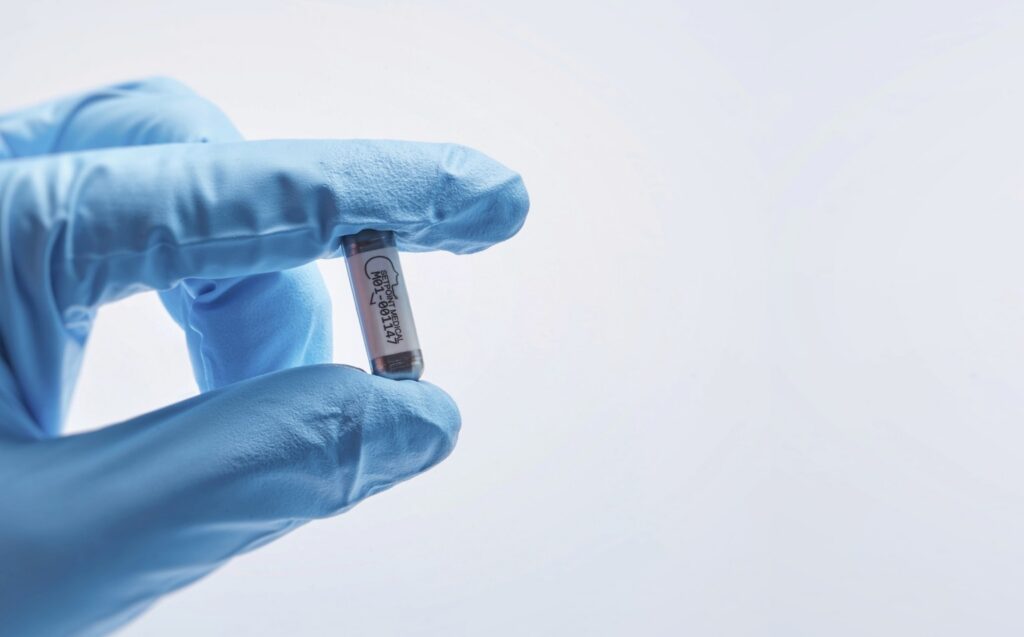
The SetPoint System is a small implanted medical device designed to stimulate the vagus nerve for one minute, once per day. The system includes an implanted wireless device, pictured below, and external accessories used to support and manage stimulation.
TAKING PART IN THE STUDY
Why consider participating?
Current disease-modifying therapies (DMTs) for RRMS are used to help reduce new inflammatory disease activity but are not designed to repair nerve tissue. This study is evaluating whether stimulation of the vagus nerve using the SetPoint System may support biological processes related to remyelination, when used in combination with DMT's.
How Does the Study Work?
All participants will receive the investigational Implant. After undergoing the implantation procedure, participants will be randomly assigned to receive either active doses of stimulation (study treatment) or non-active doses of stimulation (control), for 12 months (primary study). You will have a 2:1 chance of being assigned to either group, but you will not be told your group assignment. Without the control group, there would be no way to compare the new therapy to current treatments. Regardless of your group assignment during the primary study, you will continue to take your disease-modifying therapy throughout the study and will receive the same level of care. After the 12-month primary study, all participants will receive active doses of stimulation for another 12 months.
What will participation involve?
Participants will be required to visit the study site seven times during the first three months of the primary study. Thereafter, visits will occur once every 12 weeks. Participants can receive up to $2600 for their time and travel during the course of the study. All costs of study-related procedures and assessments including implantation, programming, and removal (if needed) of the implant will be covered by the study sponsor.
PROCEDURE OVERVIEW
VAGUS-NERVE MEDIATED NEUROIMMUNE MODULATION
Stimulation of the vagus nerve has been used over the past two decades for the treatment of epilepsy, depression, and more recently for upper extremity stroke rehabilitation. Researchers have learned that the vagus nerve plays a role in helping regulate the body's immune and inflammatory responses. Vagus nerve-mediated neuroimmune modulation with the SetPoint System was recently approved by the FDA in 2025 for use in people who have moderate to severe Rheumatoid Arthritis. In this clinical study, researchers are evaluating its use in people living with relapsing-remitting multiple sclerosis (RRMS).
SETPOINT SYSTEM IMPLANT
The SetPoint System includes a small implanted device and external components used to support and manage therapy. The device does not administer any medication. Instead, it is designed to automatically deliver small electrical pulses to the vagus nerve for about one minute each day.
The safety and effectiveness of the SetPoint System have already been established for treating rheumatoid arthritis. In this study (SPM-040), the device is being evaluated in people living with RRMS.
KEY POINTS
- The implantation procedure will be performed by a study surgeon that has prior experience performing this type of surgery.
- Before the procedure, your study surgeon will meet with you for a pre-surgical clearance visit. During this time, the study surgeon will review what will happen during surgery and answer any questions you may have.
- During the surgery, the Implant is placed on the vagus nerve through a small, 1-inch incision on the left side of the neck. Incisions are typically placed along a natural crease in the skin to minimize appearance of the surgical scar.
- The surgery takes about 60-90 minutes and is performed under general anesthesia.
- Patients typically return home a few hours after the surgery.
- Patients typically resume activities of daily living the next day.
FOR MORE INFORMATION
This information is intended to provide a general overview of the study. It does not replace the informed consent process. If you would like more information, please speak with your study doctor or research staff. They can answer your questions and discuss the study in greater detail. The study can be found on www.clinicaltrials.gov under ID: NCT06796504.
Caution: Investigational device. Limited by Federal law to investigational use. For clinical trial use only. CLM-556, Rev A